How the idea began
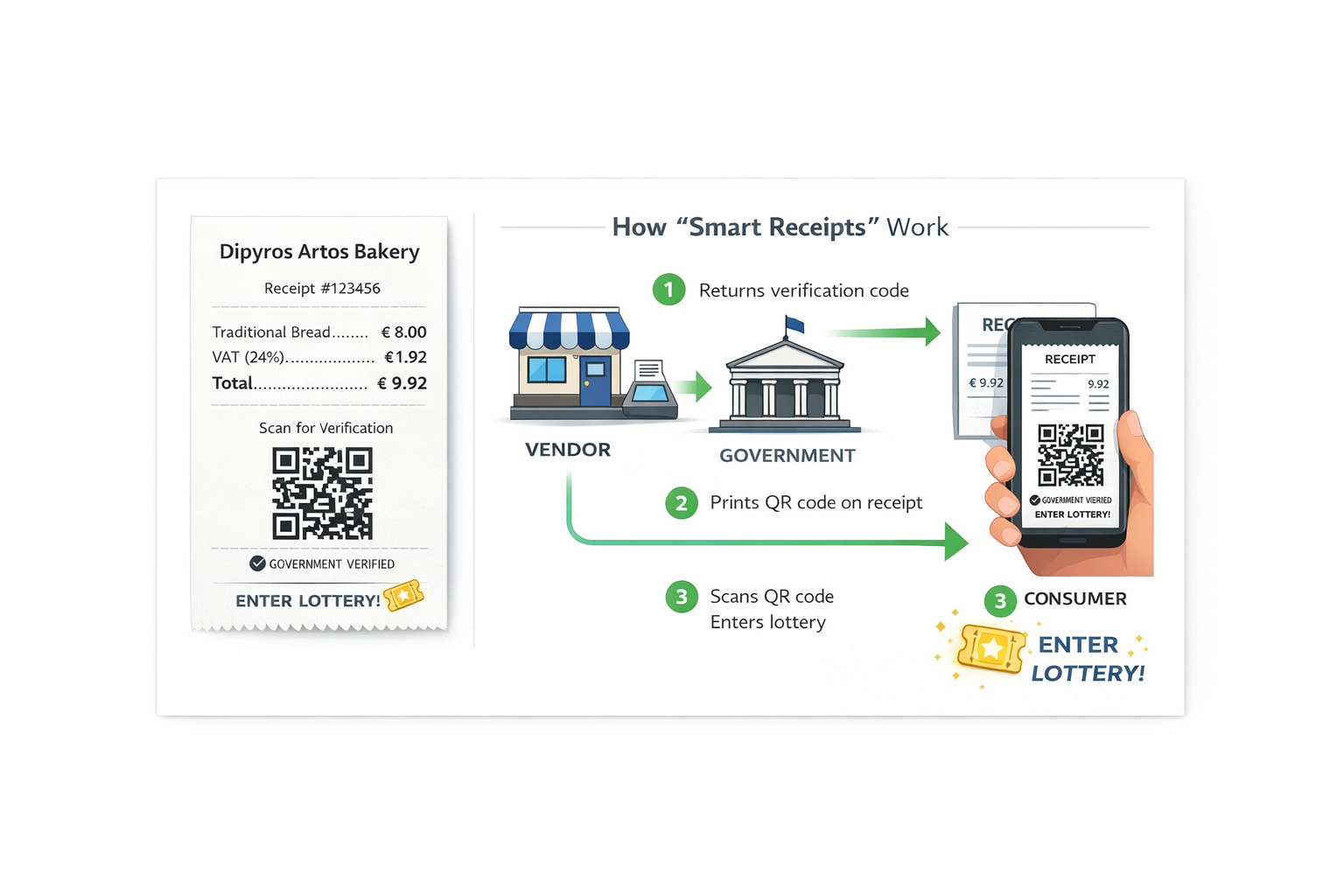
Back in 2015, I was preparing to launch my bakery, Dipyros Artos, in Peristerona, selling traditional bread. Like every small business owner, I needed a cash register or a POS system to issue receipts, record sales, and manage day-to-day operations.
I visited several vendors looking for something practical and fair. The so-called “simple” cash registers did not seem simple at all. They were closed systems with limited memory, annual fees, and very little flexibility.
Then I found a POS vendor promoted by the local phone company as a SaaS product for about 30 euros per month. That sounded reasonable, until the vendor insisted on also charging a 300 euro training fee. To me, that already felt wrong. But what shocked me far more was what came next.
He did not know me. Yet he spoke as if tax cheating were normal, expected, and built into the business culture. At that moment, I realized the problem was larger than one vendor or one business. The system itself was too easy to manipulate.
From frustration to invention
Instead of simply reporting that vendor to the authorities, I began thinking about a system that could work for every country in the world: a system designed to make it difficult, even impossible, to underreport sales and cheat on taxes.
The idea was not to build a full accounting platform. It only needed to do one essential thing well: verify, in real time, that a sale had been reported to the government.
The analogy was obvious. When a credit card is processed, a request goes from the merchant to the bank, and an approval code comes back immediately. Why should tax reporting not work in a similar way?
What a Smart Receipt is
My idea, which I described at the time as Smart Receipts, was straightforward:
In other words, the citizen would no longer have to trust blindly. The citizen could verify.
Why this matters
Fairer competition
Honest businesses should win because they offer better quality and service, not lose to competitors who survive by underreporting revenues.
Better public finances
Governments can collect more revenue without increasing tax rates, creating room to reduce VAT, improve services, or strengthen social programs.
Consumer empowerment
If tax is withheld from the customer’s purchase, the customer should be able to confirm that the money was actually passed on to the government.
A digital right
Over time, I came to believe that receipt verification should be seen as a modern digital right of the citizen.
Receipts becoming lottery tickets
My original idea included an additional layer that I believed would dramatically increase public participation: each smart receipt could also become a lottery ticket.
In countries such as Greece, and in many other places, people have a special relationship with luck. Even if the receipt is for just one euro, many customers will ask for it and keep it if they believe it may bring them a chance to win a car, 10,000 euros, or another meaningful prize at the end of the month.
This creates a powerful alignment of incentives. The customer asks for the receipt, the receipt gets scanned, and the government gains millions of additional verification points without needing an army of inspectors.
My core belief
Technically, this is not a major problem to solve. Governments should not have to spend millions for a system whose purpose is actually quite focused: register the sale, return a confirmation, and let the citizen verify.
A better tax system does not need to be oppressive, complicated, or wasteful. It can be simple, fast, transparent, and fair.
About the domain
I am the owner of RealTimeVAT.com. This page exists to document the original thinking behind my work on real-time VAT reporting, smart receipts, and the idea that modern technology can help create both fairer markets and stronger public trust.
Consulting & Contact
If you are a government, organization, or company interested in implementing real-time VAT systems or smart receipts, I am available for consulting and advisory services.
Please reach out via: https://webium.com/support.html